
The Artist’s Need for Control
Winter in SokchoThis flow traces the conflict between Yan Kerrand’s desire to make perfect images and the instability that repeatedly ruins or transforms them.
increasing Bearing strength in each event
 decreasing
Bearing strength in each eventdecreasingA Woman Blotted Out
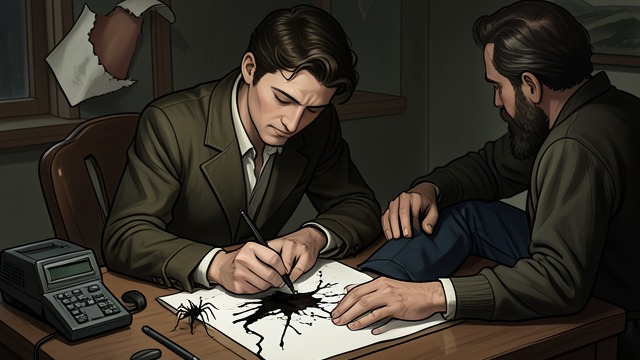
A Woman Blotted Out
Drawing into erasure
The narrator watches Yan Kerrand sketch a woman until her face emerges, then deliberately daub ink over it until the figure becomes a black mass. He does not react when a spider climbs his leg.
He tears off a piece of the paper and chews it.
Creation under pressure
The drawing’s destruction suggests that the artist cannot yet tolerate the figure as finished. His physical response connects artistic control with discomfort and self-consuming frustration.
A Laughing Face
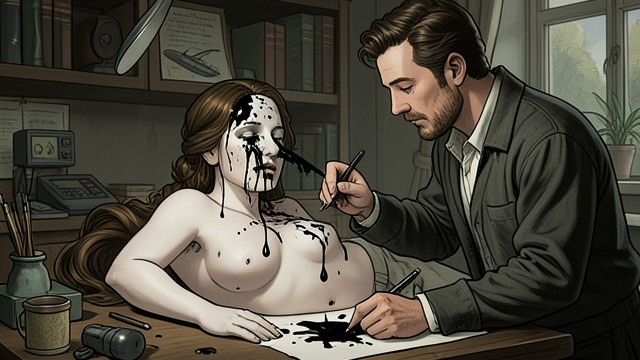
A Laughing Face
An image breaks through
The narrator sees Yan Kerrand draw a woman’s body and gradually give her a face. When he inks her teeth, they appear to laugh with a sound too deep for a woman.
He knocks over the ink, and the figure disappears beneath it.
The failure to hold form
The scene turns a supposedly finished expression into a threat to the artist. His attempt to make the image precise ends in a loss of control that erases what he has made.
Ink on the Landscape
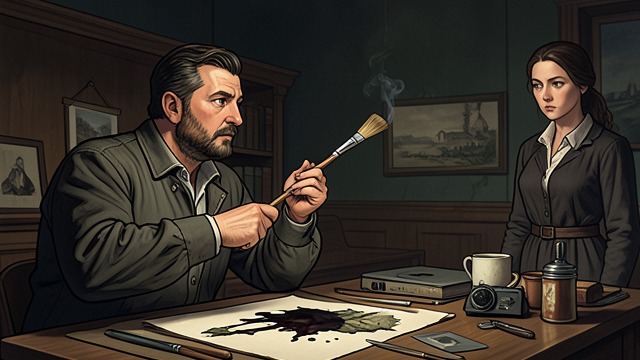
Ink on the Landscape
A stopped gesture
When the narrator says his hero will find no woman in Sokcho, Yan Kerrand freezes with his brush raised. A drop of ink gathers at its tip before falling across part of the landscape.
The narrator thinks she sees pain in his expression but cannot be certain.
Control interrupted
The spill makes their argument visible within the work. A chance mark interrupts the careful landscape, turning conflict into an unplanned revision of his image.
A Woman for All Time
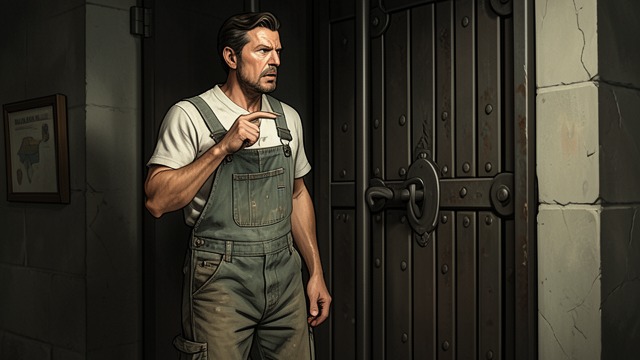
A Woman for All Time
The ideal figure
Yan Kerrand describes the woman his hero needs as a woman for all time. Elsewhere he insists that once ink fixes a line, he wants it to be perfect.
The narrator understands that his ideal leaves little space for ordinary, changing bodies.
Perfection becomes conflict
His aesthetic demand becomes an interpersonal obstacle: he seeks a figure who can complete his story, while the narrator wants to be recognized without being transformed into an ideal.
The Image Released
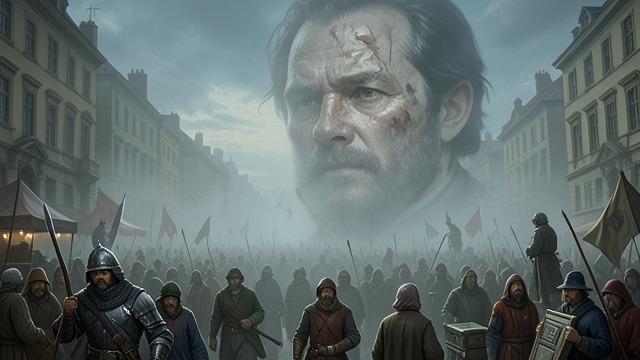
The Image Released
Frames opening outward
The sketchbook’s later pages loosen the earlier frames, carrying figures toward a sea and sky with fewer clear boundaries. Color appears in traces, and the images seem to form and dissolve at once.
The artist’s work no longer insists on the same sharply controlled monochrome world.
A changed ending
The final image turns the narrator’s scar into a line on a fish, linking control to transformation rather than simple completion. The book’s artistic resolution remains open-ended.
Early in Yan Kerrand’s stay
After the border trip
After the narrator confronts him
During the café conversation
In the final pages left behind
